When an uninitiated reader encounters the collocation "financial market", they discern no difference between such terms as "stock market", "exchange", "Forex", "equity market", "bond market", "currency market", "derivative market", etc. So, I think there should be an explanation what the financial market really is. First of all, understand and remember that the financial market is not just a place for trading, but the entire system of the economic relations, which appeared in the process of exchanging different goods and recourses.
All posts
Leverage means the ratio between the money you own and that borrowed from the broker. Different brokers offer different leverage sizes, which also depend on the market you are trading.

To trade with leverage, one must understand what it is and what we need it for. Leverage is a ratio of borrowed money to your own funds. It is also called trading leverage or financial leverage. To better understand what leverage is, study an example below.

We hope that this post will be interesting and useful to both beginners of the Forex market, who’d like to invest minimum money, and experienced managers, who invest large amounts of funds in diversified investment portfolios.
Are there any beginners, who haven’t asked themselves a question what a CFD is and how it is different from a real asset? Let’s go deeper in these terms and try to determine which one of them is more interesting and easier-to-use for both beginners of stock exchange markets and experienced investors. What is CFD? […]

In very simple words, liquidity indicates an asset’s ability to be sold in a short period of time at the price that is close or equal to the requested price. If we dig into the matter, we’ll find out that liquidity means an opportunity to convert an asset into its monetary equivalent. An asset may […]
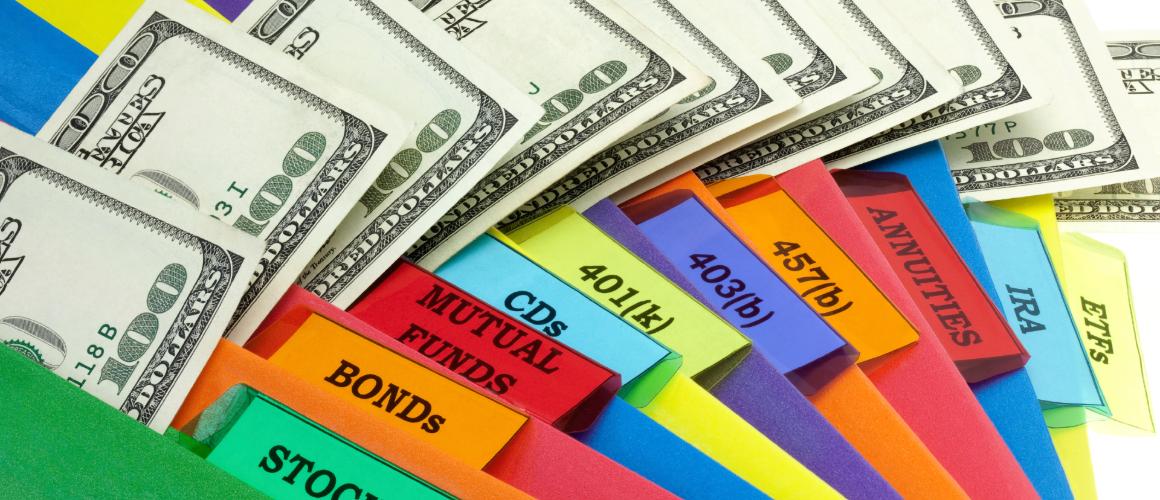
An investment portfolio is a set of financial instruments. The purpose of acquiring such instruments is of course making profit in the future. Options, stocks, futures, metals, real estate, currencies, and many other assets – all of them can be considered as financial instruments.

There are a lot of discussions about trading within the boundlessness of the Internet, both in conventional businesses and state-financed organizations. People say and write a lot of different things. More often than not, they are sure that trading can’t be regarded as a primary source of income.
Who in the world of trading hasn’t heard of scalping? Probably, you may know it as pipsing, but all traders surely heard a lot of different things about it, some of them tried it in practice, others are just going to, that’s why I guess it would be interesting to go into details of such thing as scalping.
Every beginner in trading asks themselves the same question: “Exactly what kind of a trading terminal should I choose for trading?” There are a lot of different trading platforms that have both similar features and essential differences. Among these differences are such nuances as installation on PCs or mobile devices, availability of a terminal in a web browser without installing any additional software components, opportunities to use a terminal for free or on a paid basis.
As soon as they get a little free money, beginners open another position and, when it comes to the crunch, lose all their orders and entire deposit. To avoid such situations, people created and developed some specific rules to manage their capital and risks.

Forex is the largest market across the globe that accounts nearly 90% of all capital markets. Its yearly turnover is ten times bigger than the overall world's GDP.
When it comes to margin, people who are not knowledgeable in trading usually think it's the difference between the buying and the selling price. While this is true for most other cases, in trading, margin means a collateral you've got to pay in order to open your position.
Most traders I have known want to absolutely conquer the market. Some succeed, but only every now and then, failing to turn this conquer into a permanent win. The reasons are many, from insufficient skills or experience all the way to the lack of the 'holy grail', with the 'not enough money' reason in between. Well, a good set of excuses. These reasons, however, are somewhat true, as all traders are different and use their trading potential differently.

Hedging risks is an essential ability for both new and advanced investors. Risk hedging is used when a trading system no longer works, and you've got to secure your capital against the volatile market conditions.