OpenAI Is Building Its Own AI Smartphone. What It Means for Apple, Google, QCOM, and Investors
14 minutes for reading
OpenAI is developing its own AI-powered smartphone, which could bring an end to the era of Apple and Google’s dominance. In our in-depth analysis, we explore where this information came from, why OpenAI needs a smartphone, and how it could revolutionize the mobile device market.
In Brief
- OpenAI may launch its own AI smartphone as early as 2028.
- Qualcomm, MediaTek, and Luxshare are named as likely hardware partners.
- ChatGPT is set to become the central interface of the new device.
- OpenAI is pursuing direct user access — bypassing Apple and Google.
- Apple (AAPL) fell 2% on the news; Qualcomm (QCOM) rose 5%.
- OpenAI is reportedly preparing for a potential IPO.
Instant Access to Global Markets with RoboForex MobileTrader
OpenAI Is Developing an AI Smartphone
On 27 April 2026, analyst Ming-Chi Kuo published a post stating that OpenAI may be working on its own AI smartphone. According to his data, the company is engaging with MediaTek and Qualcomm for processor development, while Luxshare is a candidate for the exclusive design and assembly partner. The core concept: a device where the user formulates a request and ChatGPT selects the required action itself.
OpenAI may finalize specifications and select suppliers by the end of 2026 or Q1 2027. Mass production is expected to launch in 2028. This is not yet an official announcement from OpenAI, it is supply-chain data analyzed by Ming-Chi Kuo.
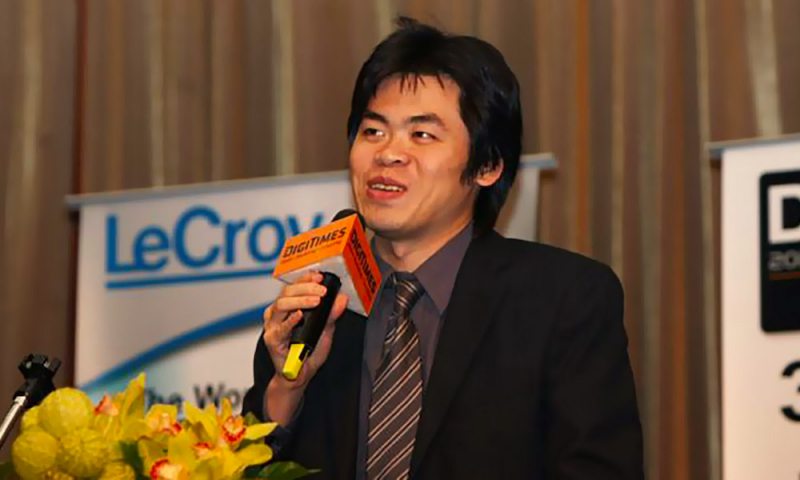
Ming-Chi Kuo is a Taiwanese analyst who tracks component manufacturers and partners of major technology companies. He is best known for his Apple forecasts. When a company prepares a new device, it begins working with chip, display, frame, camera, battery, and assembly suppliers months or even years before release. Such traces often appear a year or two before the release. Kuo specializes in reading those traces early.
According to AppleTrack, Kuo's historical forecast accuracy is estimated at 72.5% — a high figure for advance device intelligence. That track record is why his post moved markets the same day it was published.
Qualcomm, MediaTek, and Luxshare: What Each Brings
Qualcomm and MediaTek are the two dominant developers of mobile processors. Both compete directly in the smartphone chip market, but in the context of OpenAI they could serve as alternative suppliers — or parallel partners for different tiers of the same device. Qualcomm is associated with the premium segment; MediaTek holds strong positions in mid-range and mass-market. It is possible that future OpenAI smartphones will be segmented: a premium model and a more affordable version.
Luxshare is a large Chinese electronics manufacturer that assembles devices for major technology companies at scale — it is already one of Apple's key production partners. For OpenAI, Luxshare matters as a potential manufacturing partner capable of building complex electronics and scaling to millions of units.
How the OpenAI Smartphone Strategy Developed: Timeline
- February 2025. Sam Altman stated that OpenAI wanted to develop specialized hardware for the AI era — a new type of user device better suited to working with artificial intelligence than conventional smartphones and computers, ideally in partnership with Jony Ive.
- May 2025. OpenAI announced its intention to acquire io Products, a startup founded by former Apple Chief Design Officer Jonathan Ive. The deal was subsequently completed, and the io Products team officially joined OpenAI. This gave the company a team capable of building new devices from scratch — from concept and visual design to the logic of human-AI interaction. Ive and his studio LoveFrom retained independence, but took on a significant role in the creative direction of future OpenAI products.
- 27 April 2026. Ming-Chi Kuo reports that OpenAI is in discussions with Qualcomm, MediaTek, and Luxshare — indicating the company has moved from concept to active hardware development.
Why OpenAI Needs Its Own Device
Today, ChatGPT runs as an app inside ecosystems that belong to someone else. On iPhone, Apple controls the App Store, system permissions, payments, notifications, and voice assistant access. On Android, those rules are set by Google and device manufacturers. This is a structural constraint: OpenAI cannot reach the user directly — it must always operate through a gatekeeper.
A proprietary device changes that equation. In an OpenAI smartphone, ChatGPT would be the central layer of the system — an interface through which you interact with everything else. The difference is best illustrated by comparing what a task looks like today versus what it could look like in an AI-first device.
Today
Book a flight to London: open airline app → search flights → compare options → check baggage rules → enter passenger data → pay.
OpenAI Smartphone
"Find me the best flight to London on Friday evening and book it if the price is under 100 EUR." — one instruction, handled end-to-end.
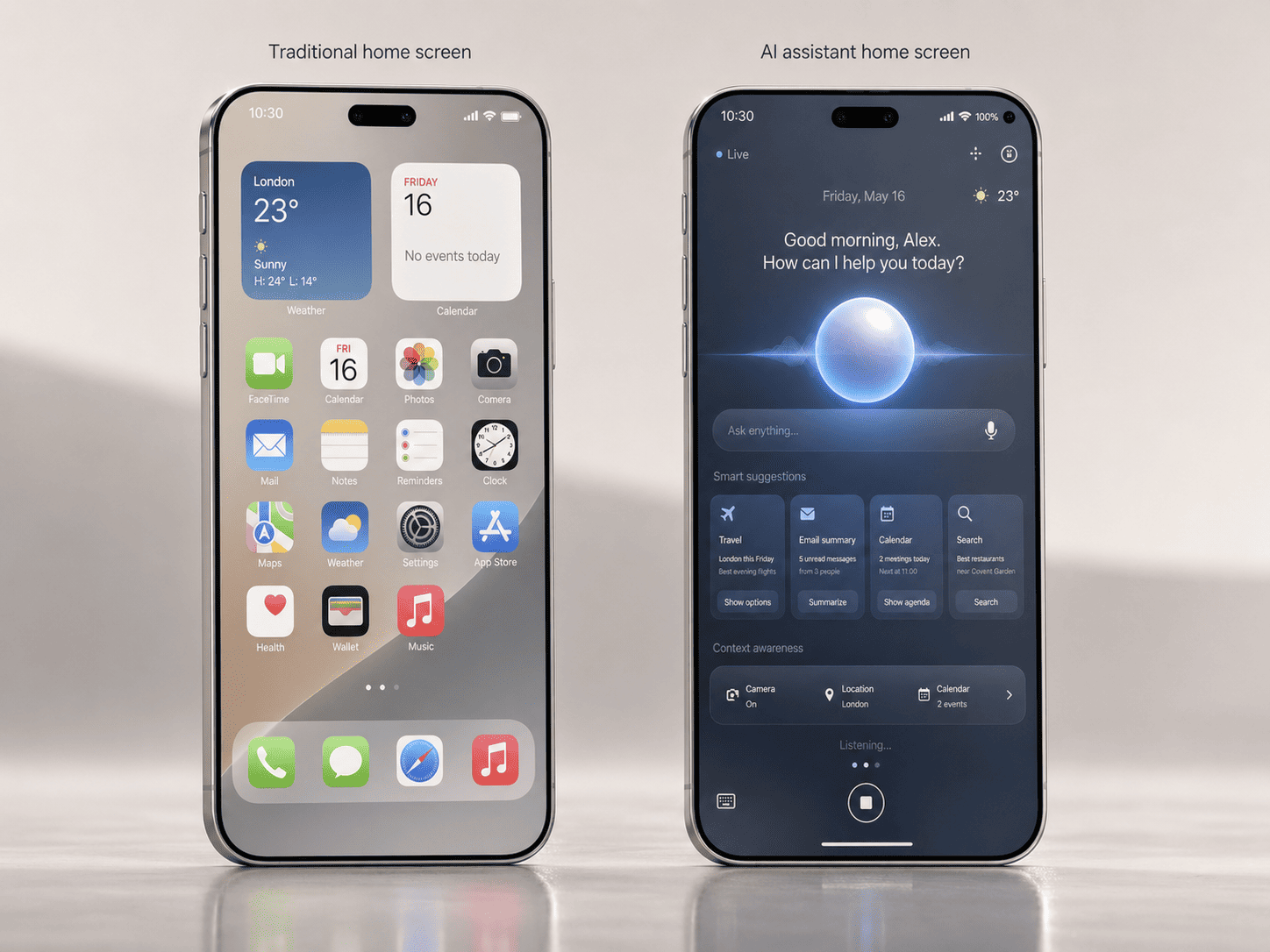
Realizing this strategy, however, requires OpenAI to develop its own operating system. A full-scale OS means apps, security, an app store, payments, updates, drivers, carrier compatibility, camera handling, battery management, notifications, banking services, maps, Bluetooth, Wi-Fi, cloud, and an enormous developer base — something Apple and Google have been building for decades. The most realistic scenario is therefore an AI-first smartphone built on an existing technical platform, most likely Android. Android can be used as an open foundation on which manufacturers build their own versions of the system — as Xiaomi (HyperOS), Huawei (HarmonyOS), and Honor (MagicOS) have done. For the user, it would appear as a new device with ChatGPT at the center; technically, a proven platform would power it.
Apple and Google Under Pressure?
If OpenAI can build a smartphone with ChatGPT at the center of the system, it does not need to immediately capture a large share of the smartphone market — that market is extremely mature, and users change habits slowly. The core threat lies elsewhere.
OpenAI, through its own OS and device, could begin taking from Apple and Google the most valuable layer: direct contact with the user and their intent. If a person first turns to ChatGPT — and only then to apps, search, or services — OpenAI becomes the primary intermediary between the user and the digital world. Today, OpenAI must negotiate with Apple and Google. In the future, the reverse situation could emerge: Apple and Google may need to account for OpenAI as an important new channel of user access.
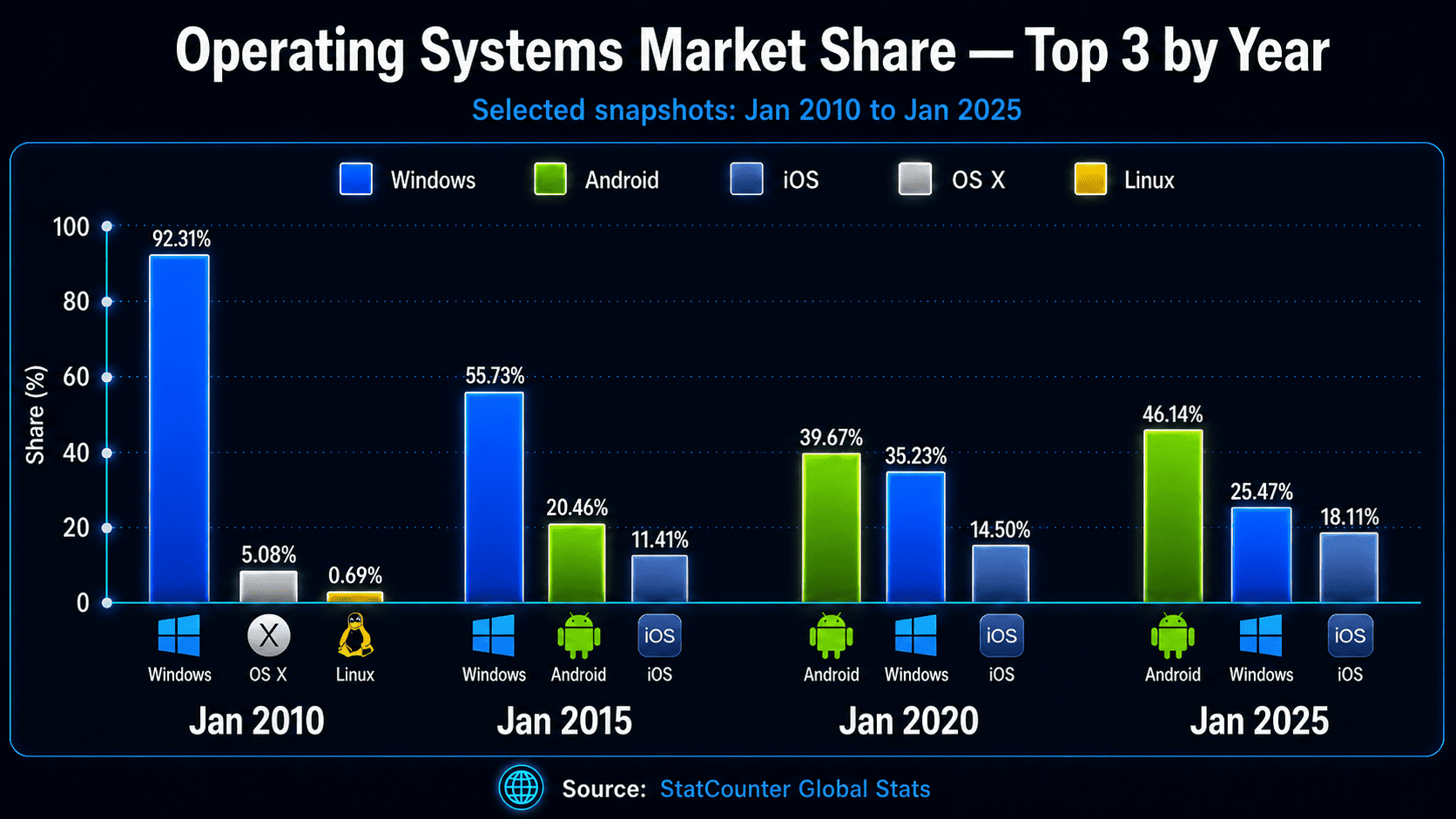
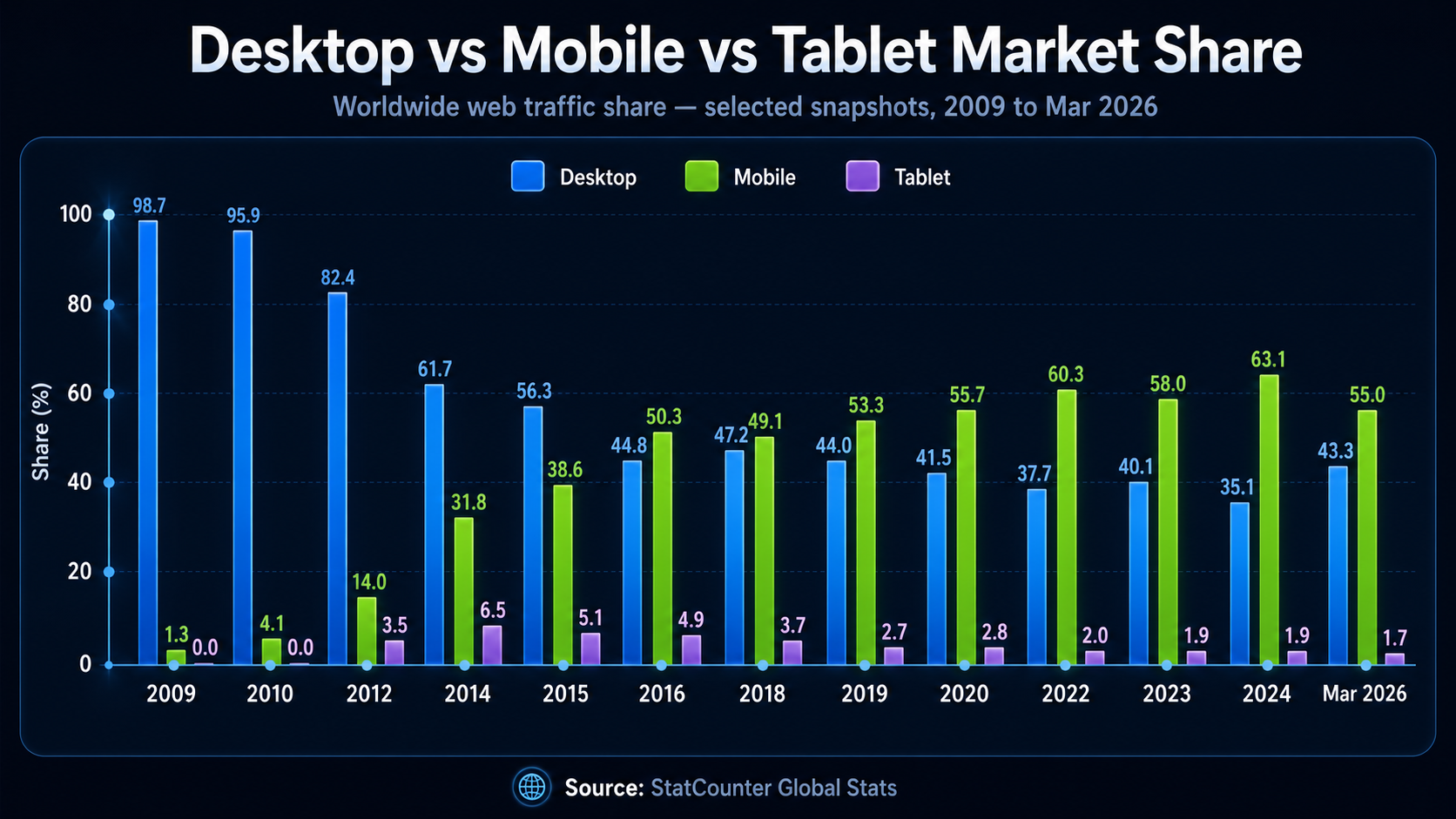
History shows that even in mature markets, new players sometimes rapidly gain share from companies that react too slowly to technological shifts. The recent CEO change at Apple additionally points to the company's known weakness: insufficient speed of AI integration into its devices. The chart below shows that technology leadership has never been permanent.
Could a New Device Category Emerge?
If OpenAI chooses to build a fundamentally different device rather than just a smartphone with a proprietary OS, the Desktop / Mobile / Tablet classification could gain a new category. The market is already in an active search for new form factors for the AI era. One such example is the Humane AI Pin — a screenless wearable where the primary interaction mode is voice rather than a conventional interface. Humane officially unveiled AI Pin in 2023, positioning it as a smartphone alternative. The device had a difficult commercial reception, but it demonstrated that the idea of a new AI-era personal device is already being tested by the market — and that OpenAI would not be unusual in pursuing it.
Market Reaction to the OpenAI Smartphone News
Kuo's post was published on 27 April 2026. That same day, Apple shares (NASDAQ: AAPL) opened 2% lower, while Alphabet (NASDAQ: GOOG) showed no negative reaction and continued to rise. This price action indicates that market participants interpreted the news as more negative for Apple than for Google — a reasonable read, given that Apple's closed iOS ecosystem is more directly threatened by an alternative AI-first operating layer.
There was virtually no doubt that an OpenAI smartphone could benefit Qualcomm Inc. (NASDAQ: QCOM) and MediaTek (TWSE: 2454). Qualcomm shares opened up 5%, while MediaTek on the Taiwan Stock Exchange gained 1.5%.
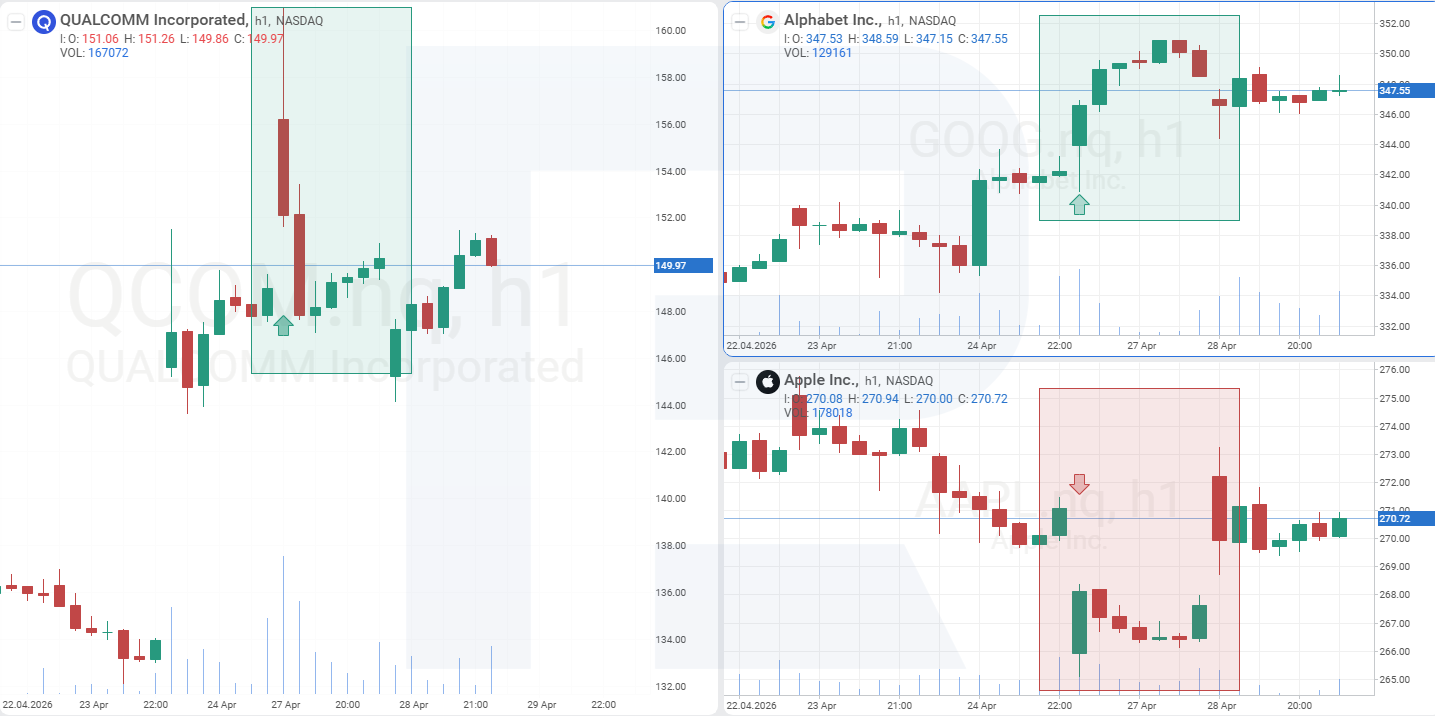
The strongest single-day gain went to Luxshare (SZSE: 002475) — the company named as a potential design and assembly partner. On the Shenzhen Stock Exchange, its shares opened up 2% and closed the day with a gain of more than 4%.
| Company | Ticker | Reaction on 27 Apr 2026 | Reason |
|---|---|---|---|
| Apple Inc | NASDAQ: AAPL | −2% at open | Direct threat to iOS ecosystem dominance |
| Alphabet Inc | NASDAQ: GOOG | +0.5% at open | Android could power the OpenAI device |
| Qualcomm Inc | NASDAQ: QCOM | +5% at open | Named as potential chip supplier |
| MediaTek | TWSE: 2454 | +1.5% | Named as potential chip supplier |
| Luxshare | SZSE: 002475 | +2% at open, +4% close | Named as exclusive assembly partner |
Open a Trading Account at RoboForex
Swap-free accounts, spreads from 0, and execution in 0.01 seconds.
OpenAI IPO: The Most Direct Investment Route
The most direct way to play the OpenAI smartphone thesis would be a position in OpenAI itself. That option may become available: according to recent reports, OpenAI is preparing for a possible IPO, including reserving a portion of shares for retail investors — though no official date has been announced. If the IPO does take place, it could become the most direct way for investors to position for the full future market of OpenAI devices and services.
What This Means for Investors
The potential OpenAI smartphone is a story about opening a new market in which the AI assistant becomes the primary interface between the user and the digital world. A similar shift already happened with the smartphone itself — it created an enormous market for mobile devices and propelled Apple and Google to leadership. If OpenAI manages to offer a genuinely new form of interaction, the consequences could extend far beyond the launch of another smartphone.
For investors today, the clearest actionable signals from this news are already visible in the market reaction: Qualcomm and Luxshare as direct beneficiaries; Apple as the company most exposed to the risk of losing platform control; Alphabet in a more ambiguous position, since Android could actually serve the OpenAI device. A future OpenAI IPO would represent the most direct bet on the entire thesis.
This is why such news matters for investors — it may be pointing to the beginning of the next major technology cycle.
This article is for informational purposes only and does not constitute investment advice or a recommendation to buy or sell any financial instruments. Trading in financial markets involves significant risk. Past performance is not indicative of future results. The trade ideas and price levels mentioned are for illustrative purposes only. Always conduct your own research or consult a qualified financial advisor before making investment decisions. RoboForex is not responsible for any losses arising from the use of information provided in this article.
× ![]()